
Vitamin C (L-Ascorbic Acid): A Complete Guide
Vitamin C powder is pure L-ascorbic acid in a fine, easy-to-mix form. This guide explains what it is, the different forms you will see, how it tastes, how to mix it, a couple of drink ideas and how to buy and store it. It is written for Cutetonic® customers choosing between powder and other formats.
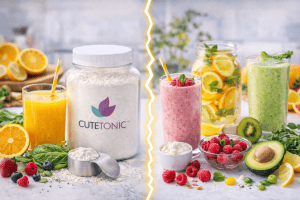
Shop vitamin C: Cutetonic Ultra Fine Vitamin C Powder (L-Ascorbic Acid) or browse all vitamins and supplements.
What is L-ascorbic acid powder?
L-ascorbic acid is the chemical name for vitamin C. In powder form it is a white, grainy powder with a sharp, sour taste. Natural and synthetic L-ascorbic acid are chemically identical, so the powder you buy is the same molecule whatever its source.
Forms of vitamin C you will see
- L-ascorbic acid powder: pure, sour and acidic. This is the form in Cutetonic Ultra Fine Vitamin C Powder.
- Buffered forms: mineral ascorbates such as calcium, potassium, magnesium or sodium ascorbate. They are less acidic and less sour than plain ascorbic acid.
- Tablets and capsules: convenient to carry, but they contain other ingredients that bind or coat them.
Powder vs tablets
- Ingredients: powder is a single ingredient. Tablets usually include binders and fillers, so check the list if you avoid certain ingredients.
- Flexibility: with powder you can adjust the amount in a spoon, while tablets come in fixed amounts.
- Taste: powder is sour and needs mixing with a drink, whereas tablets are tasteless if swallowed.
- Convenience: tablets are easier to carry and take.
- Price: compare the price per serving, not just the pack price.
How to mix vitamin C powder
- Measure the serving shown on your label with a dry, clean spoon.
- Stir it into a glass of cold or room-temperature water.
- Stir until fully dissolved, which takes a few seconds with a fine powder.
- Drink it soon after mixing, as solutions are best fresh.
As a rough guide to reading measures, a level teaspoon of the powder is about 4000 mg of vitamin C, half a teaspoon is about 2000 mg and a quarter is about 1000 mg. This is only a conversion to help you read labels, so always follow the serving directions on the pack.
Taste and recipe ideas
Plain ascorbic acid tastes very sour, a bit like a sharp sweet. Mixing it with other flavours softens the sourness.
Sparkling citrus cooler
Dissolve your label serving in a little water, add a squeeze of lemon, top up with sparkling water and ice, and sweeten to taste.
Berry squash
Stir your label serving into diluted blackcurrant or other fruit squash and serve chilled.
Cooking tip
A small pinch of the powder in homemade jam or fruit salad adds a sharp, tangy note, so add very little at a time.
How to store it
Keep the pack tightly closed in a cool, dry place away from light and heat. Moisture can make powders clump, so always use a dry spoon.
How to read the label
- Check the ingredients: a pure powder should list only L-ascorbic acid.
- Check the serving size and how many servings are in the pack.
- Compare the form (ascorbic acid or a buffered ascorbate).
- Look at the price per serving.
FAQs
Why is it so sour?
Ascorbic acid is an acid, so it tastes sharp. Mix with juice or sweeten to taste.
Can I add it to hot drinks?
Many people prefer it in cold drinks. Check your label.
Can I bake with it?
You can add a pinch to jams and sauces for a tangy flavour.
Which form is best?
It comes down to taste and preference: ascorbic acid is sour, buffered forms are milder.
Shop vitamin C powder
Ready to try it? Order Cutetonic Ultra Fine Vitamin C Powder (L-Ascorbic Acid).
Always check the product label for directions. If you have a medical condition, are pregnant or take medication, speak to your doctor or pharmacist before changing your diet or using a new product.